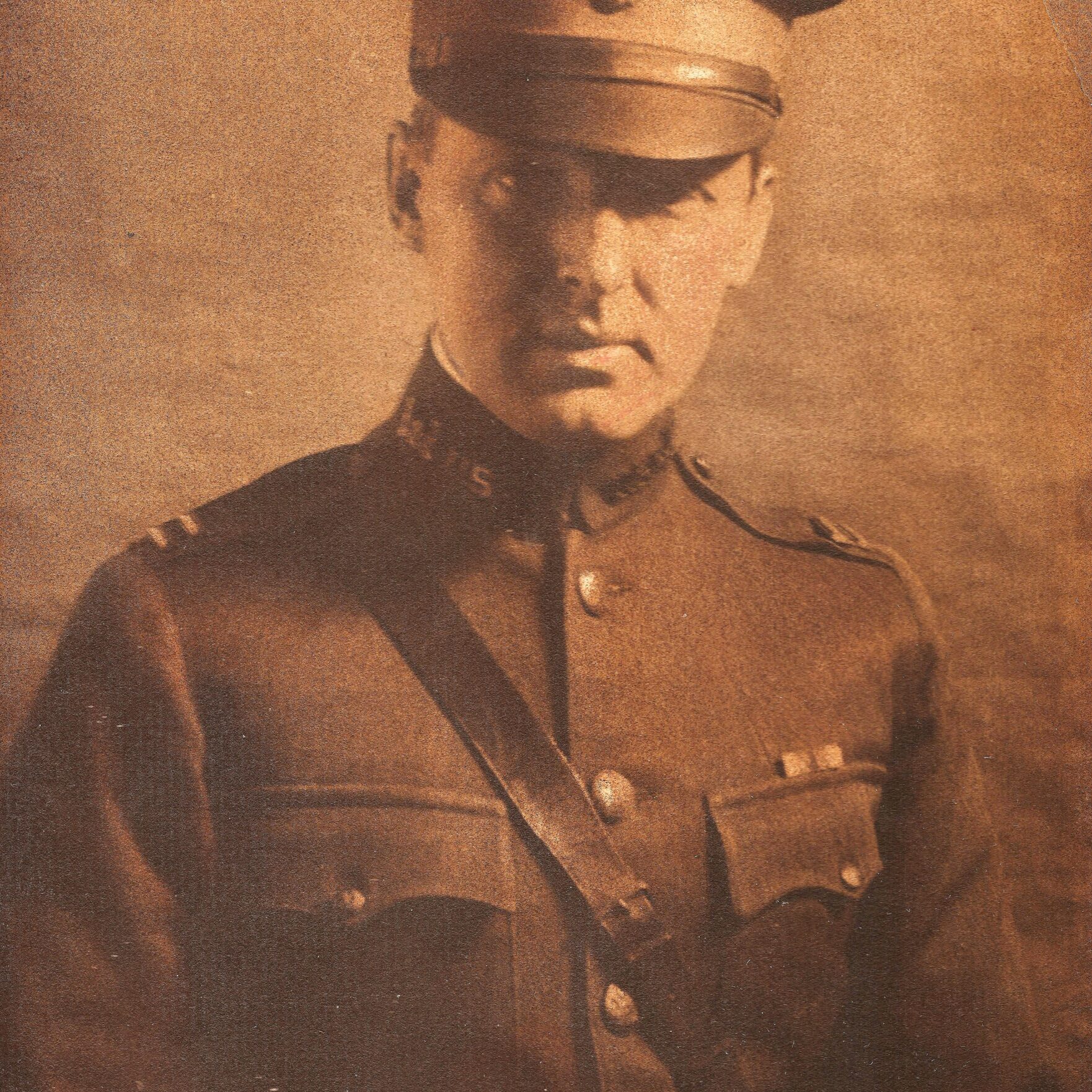
Explore the Prints of Master Etcher J. André Smith
From 1904 to 1906, Smith traveled throughout Europe on a two-year traveling fellowship awarded by Cornell. These journeys, he later wrote, “awoke in him an art-longing” that ultimately became irresistible. In 1908, Smith created his first etching plate, teaching himself the intricate process. His background in architecture gave him a strong foundation in linework and spatial design, skills that translated beautifully into etching. Frequent trips through Europe with his friend and fellow etcher Ernest Roth provided Smith with picturesque subjects to develop and refine his techniques.
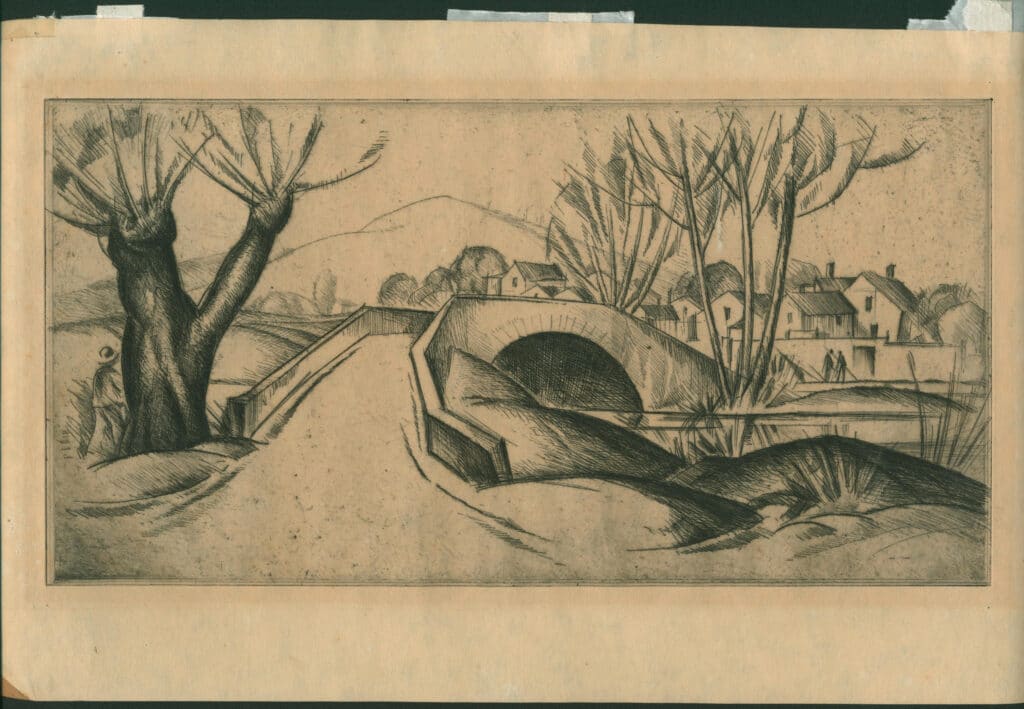
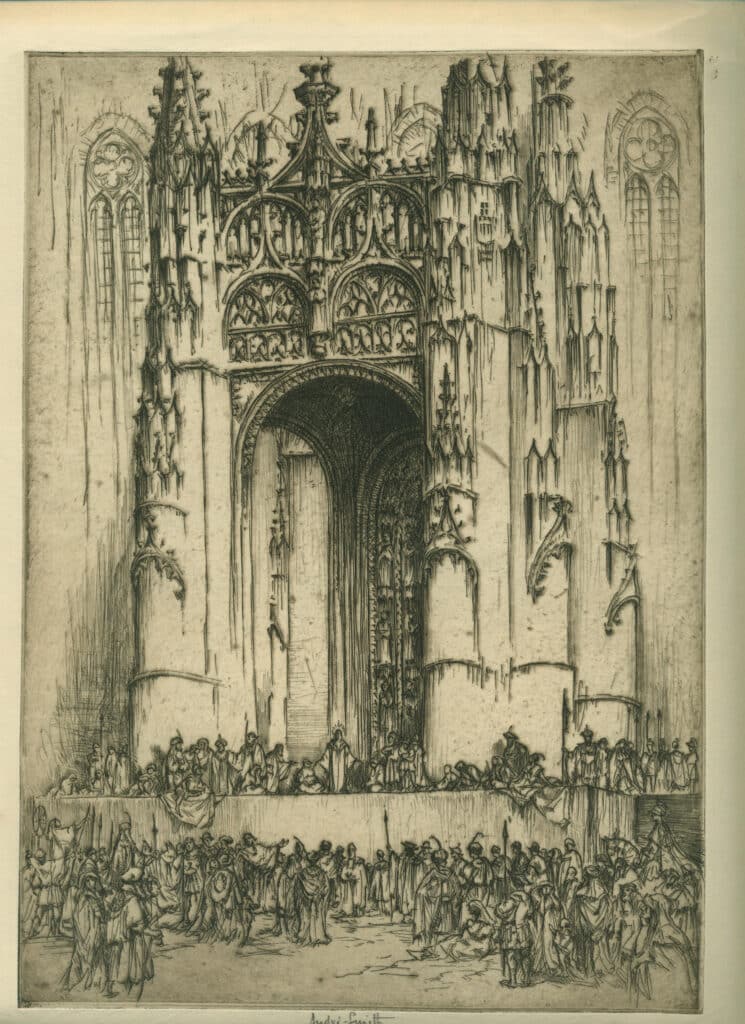
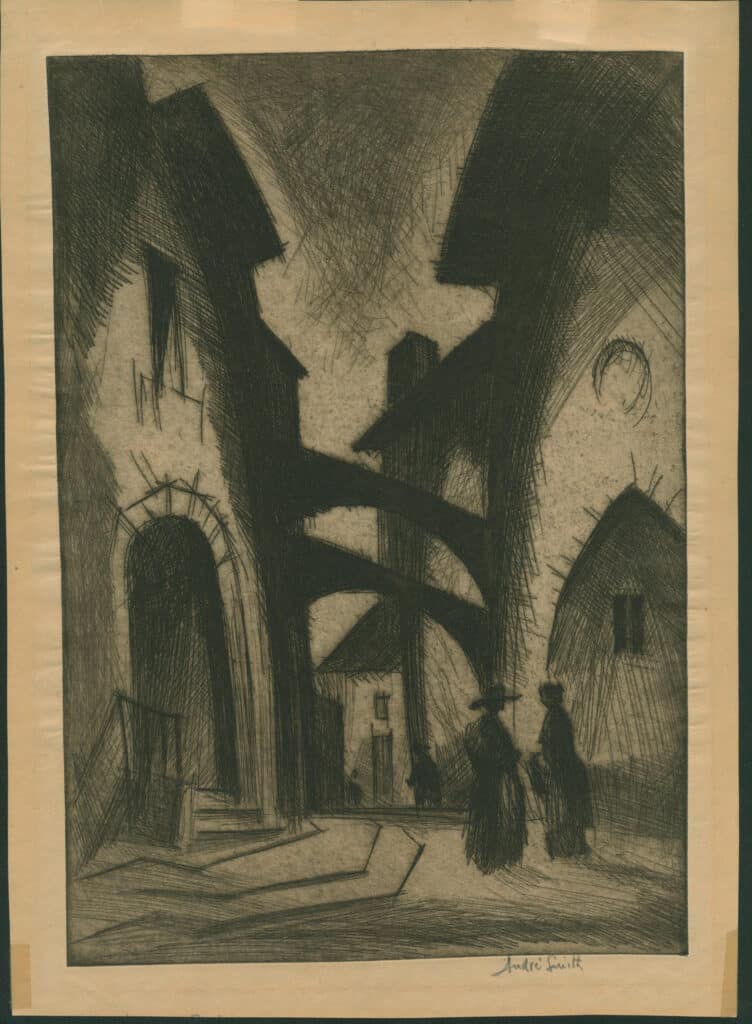
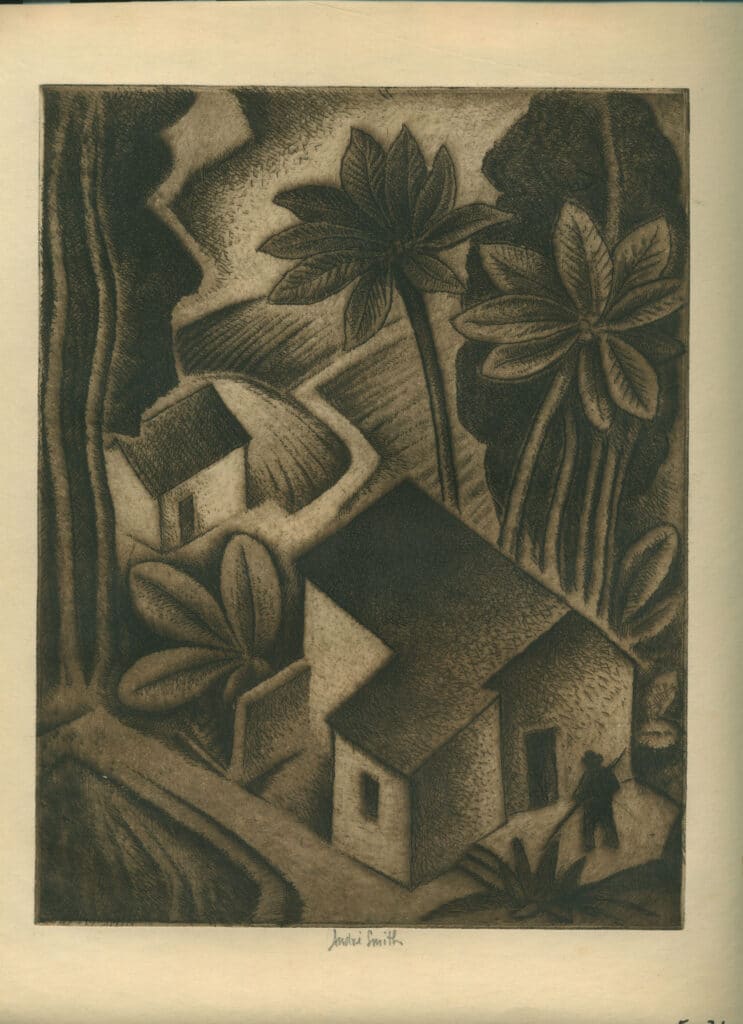
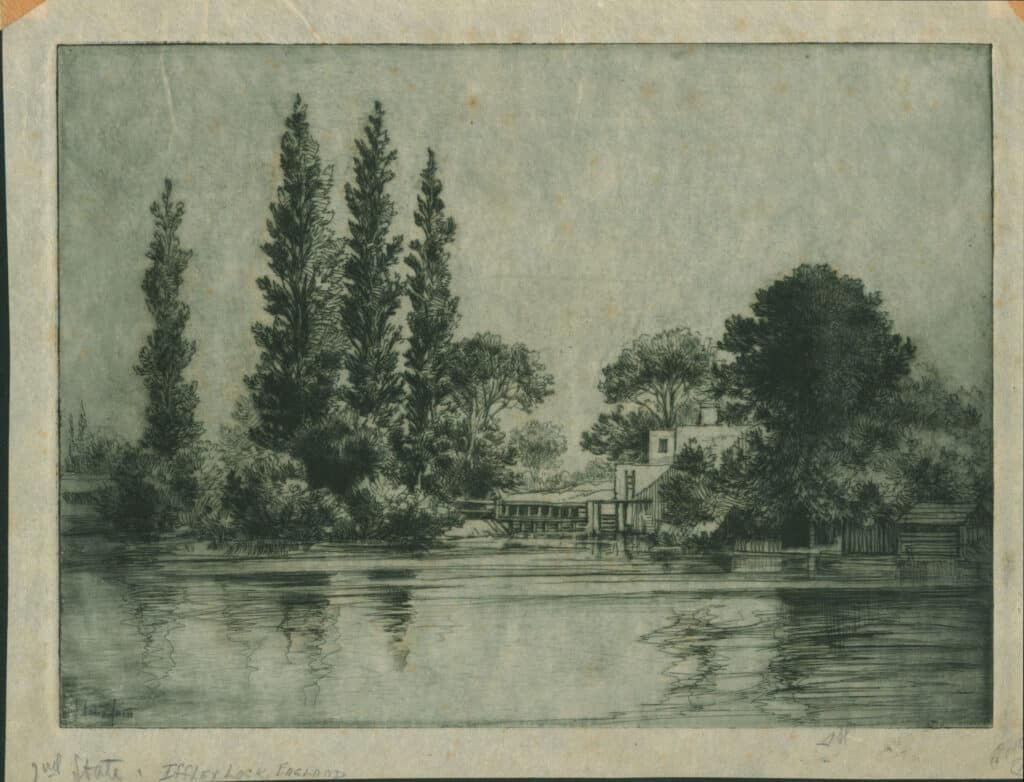
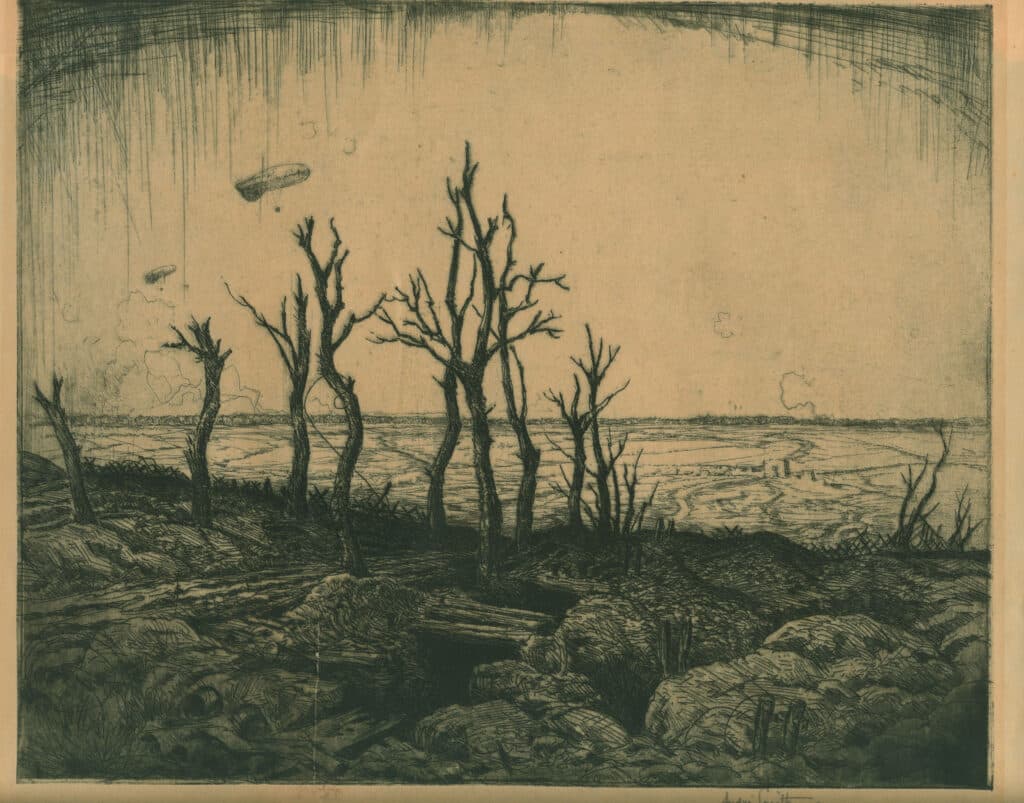
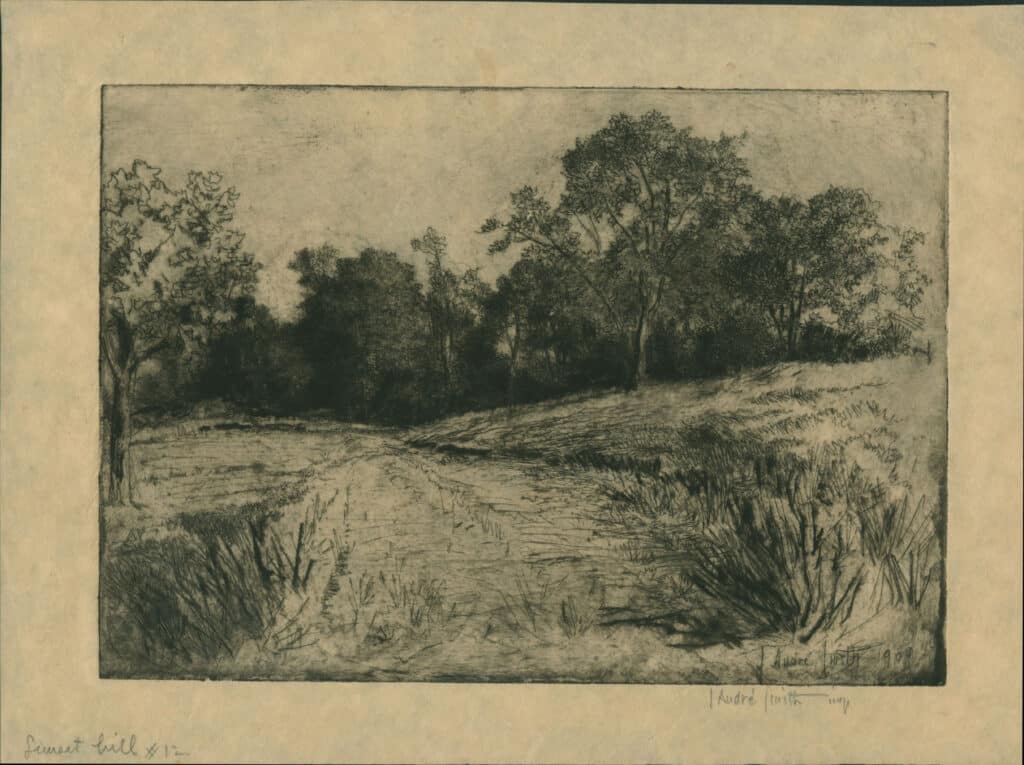
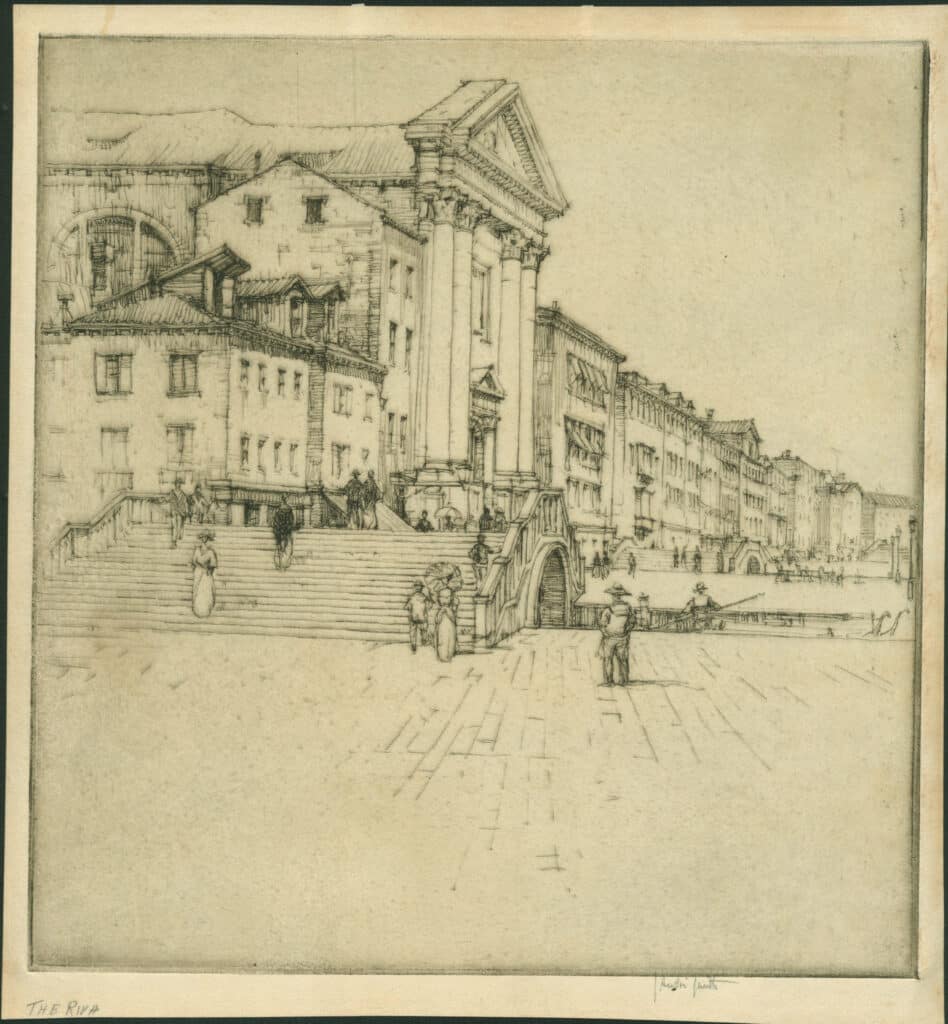
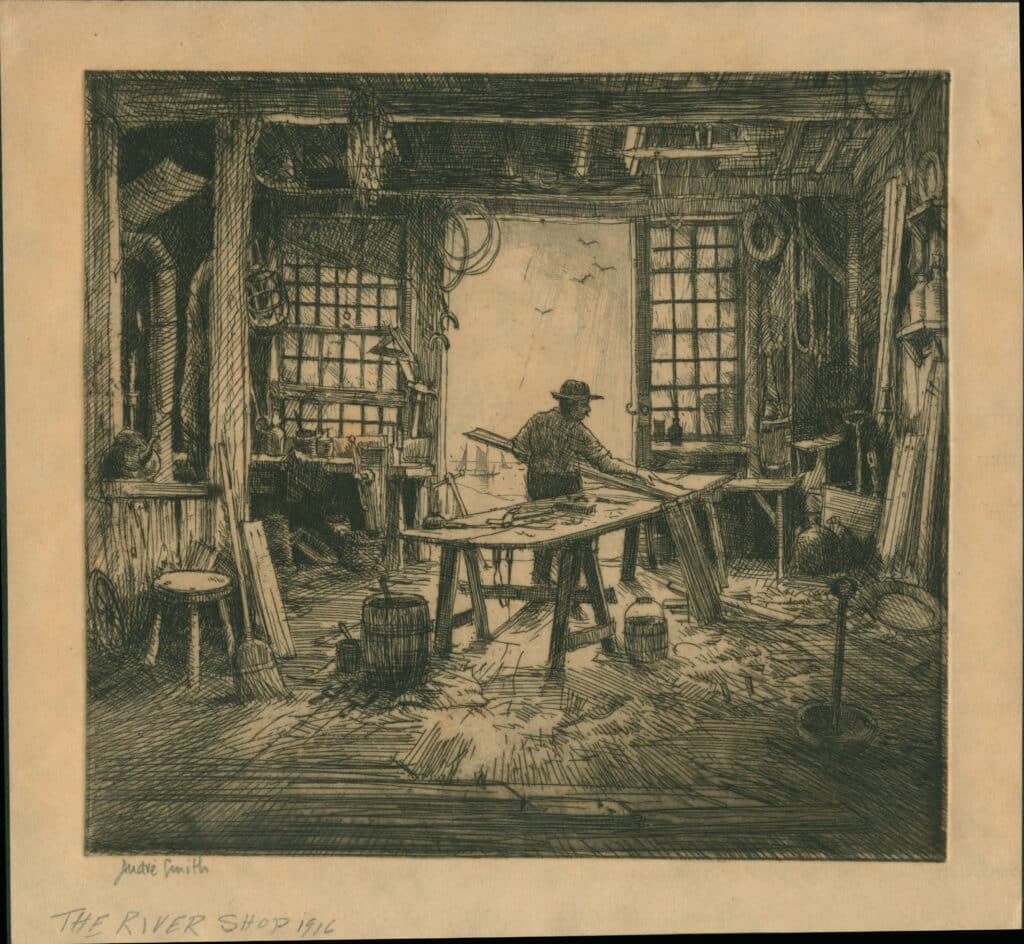
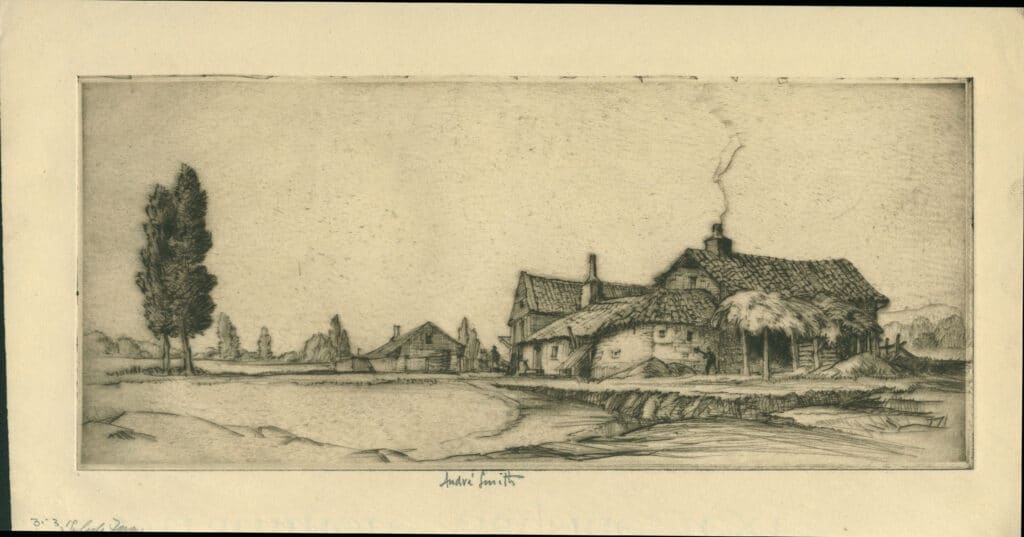
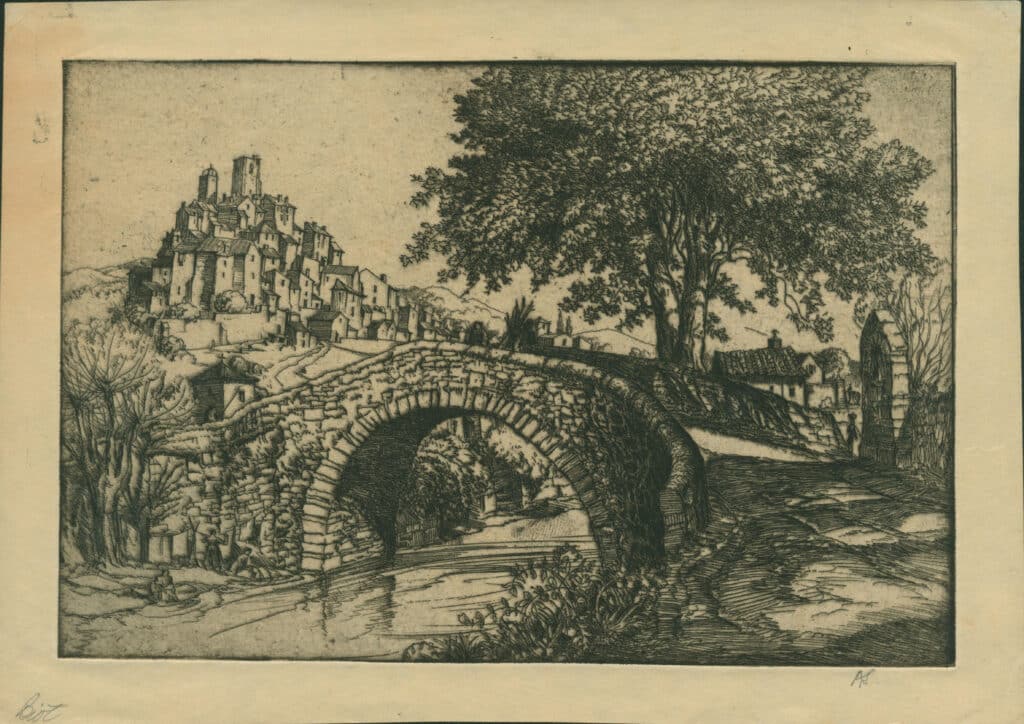
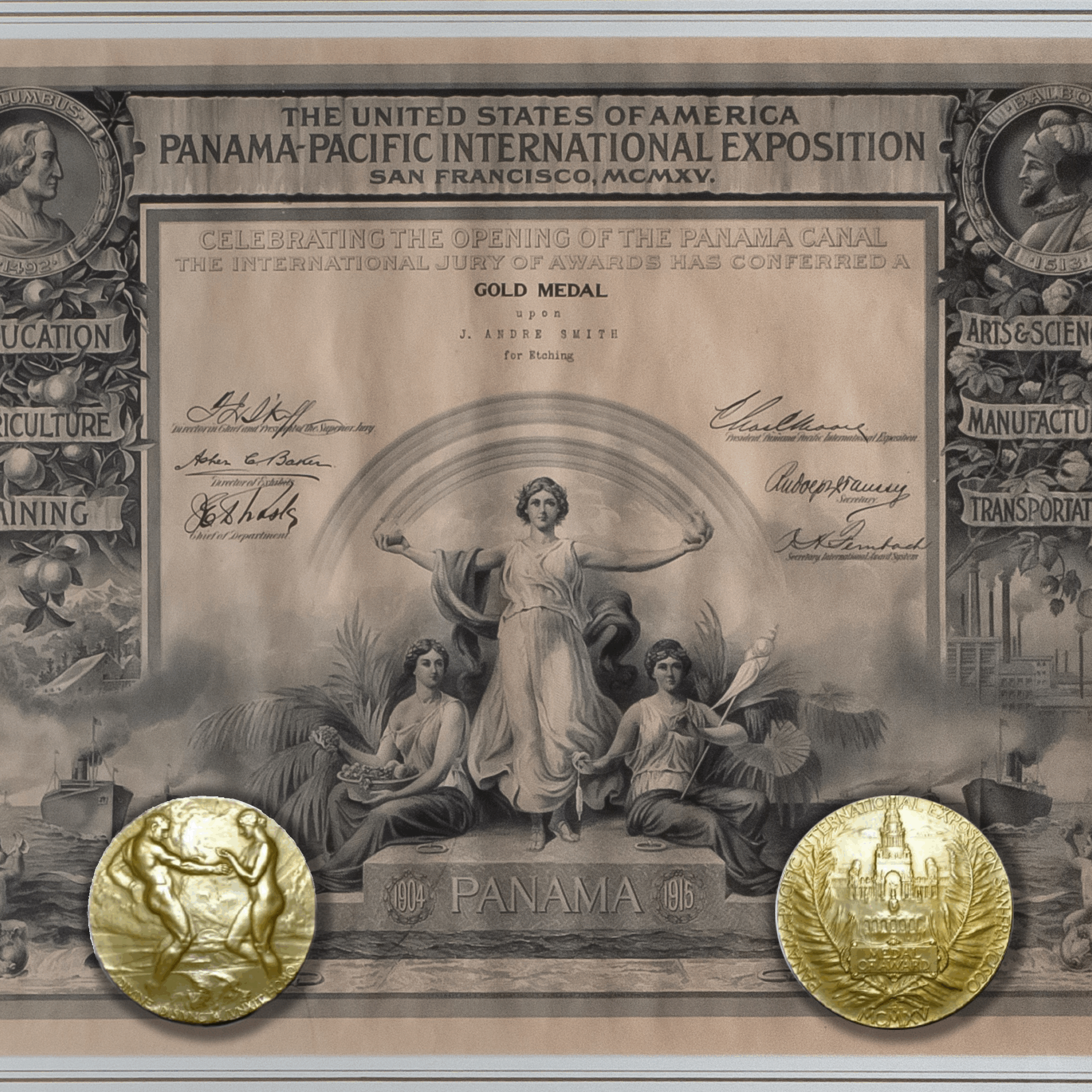
By 1913, critics began to take notice. H. H. Tolerton predicted that Smith would soon join the ranks of America’s most distinguished painter-etchers. That prediction came true in 1915, when Smith was awarded a Gold Medal in Etching at the Panama-Pacific International Exposition. This major exhibition featured more than 2,000 works by the world’s leading printmakers. Smith’s win was especially remarkable, considering he had been practicing the medium for only seven years.
In a letter to Roth, Smith wrote of his daring approach: “I am… trying to do things that no sane etcher would attempt. At any rate they interest me, are distinctly American and if the time and copper are wasted it's not the first time it's happened.”
Camouflage, War, and Printmaking in Service
When the United States entered World War I, Smith volunteered for service. After officer training in Plattsburgh, New York, he was commissioned as a First Lieutenant in the Corps of Engineers in September 1917. He was soon assigned to the American Camouflage Corps, an experimental unit composed of architects, artists, carpenters, and set designers.
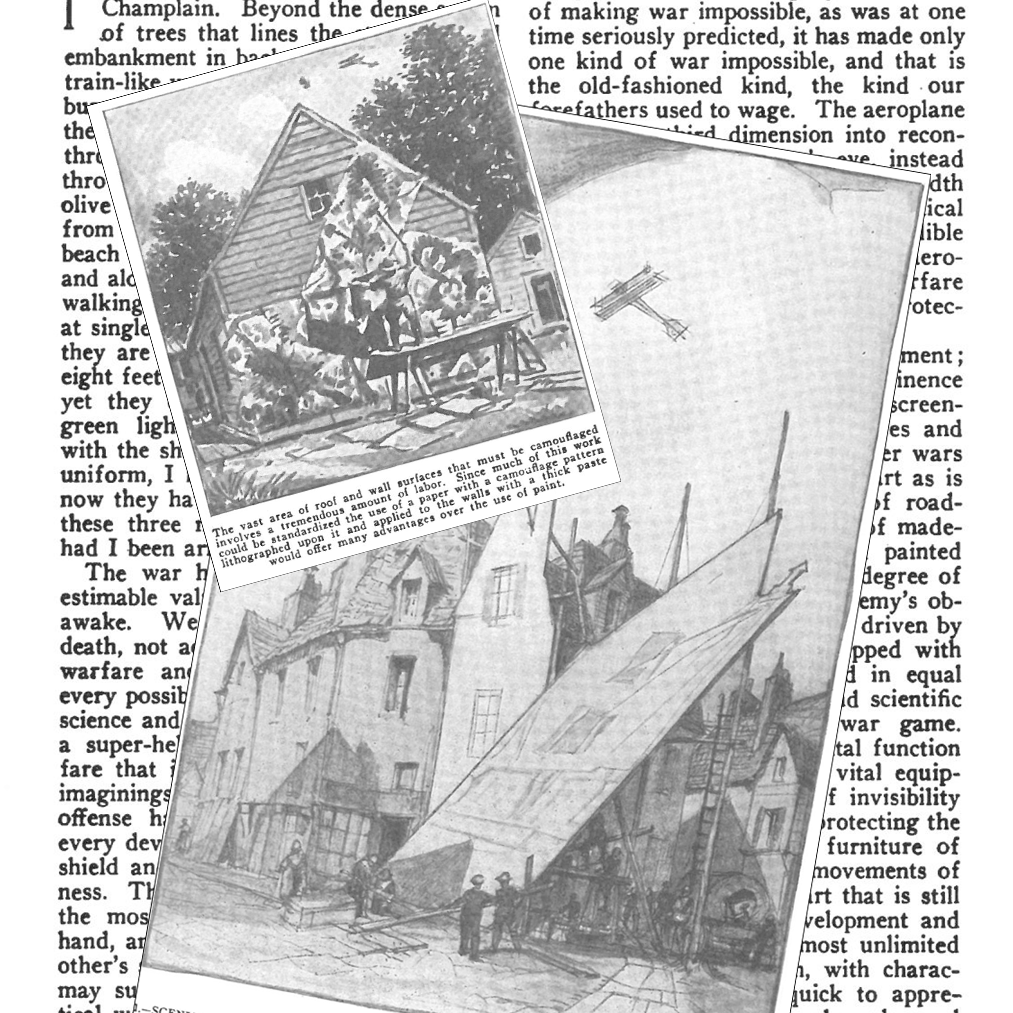
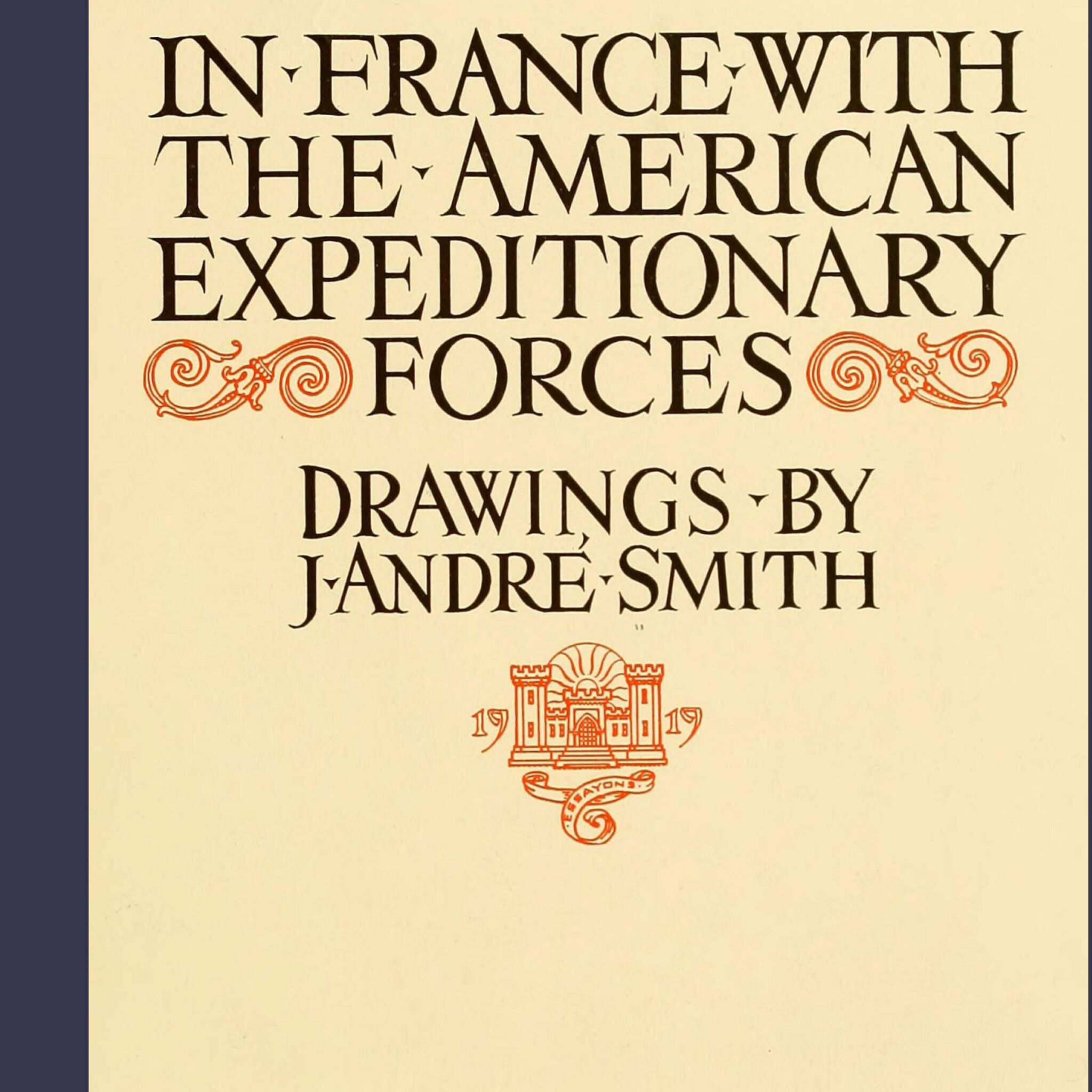
Smith served in France until March 1919. After his discharge, he published In France with the American Expeditionary Forces, a powerful illustrated memoir. His foreword describes a unique perspective: “War posed for me in the attitude of a very deliberate worker... a businessman, instead of War, the warrior.” His etchings captured war as it was lived, not sensationalized but quiet, methodical, and deeply human.
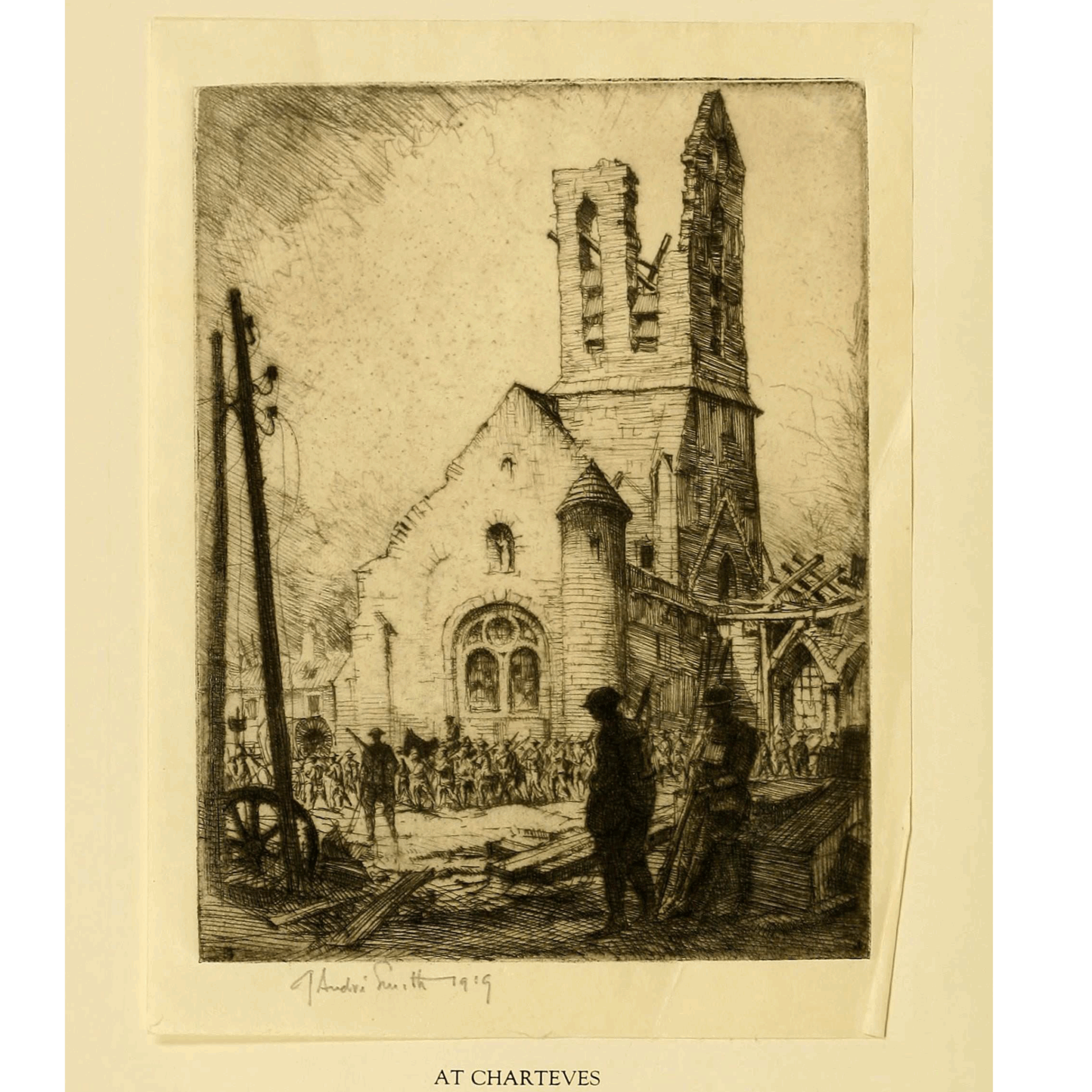
Each copy of In France included a signed proof of Smith’s etching At Chartèves (1919).
Return to Art and Recognition
Following his return to Connecticut in April 1919, Smith resumed his friendship and travels with Ernest Roth. Together they explored rural Europe, producing prints of European towns and landscapes. During this period, Smith's etchings also began to reflect a shift toward modernism, moving from representational scenes to increasingly abstract compositions that incorporated expressionist and cubist influences. Smith exhibited regularly in New York, and his works were featured in Fine Prints of the Year in 1926, 1928, 1930, and 1931.
When Smith began wintering in Florida in the late 1920s, he continued to practice etching, now inspired by tropical landscapes and communities. He brought his antique printing press with him to the Research Studio in Maitland, where he printed books such as Art and the Subconscious.
By 1935, however, Smith’s eyesight began to fail, and he was forced to retire from etching. He shifted focus to painting and concrete sculptural work, which he incorporated throughout the Research Studio campus.
Although his etching career ended early, his prints, copper plates, and press remain part of the A&H Museums’ permanent collection. His passion for the medium continues to inspire students, artists, and educators today.